The AdaPETation Network, the first regenerative network within the polymers industry that seeks, promotes and powers the best solutions to the systemic issues surrounding plastics, has teamed up with Spanish designer, Álvaro Catalán de Ocón to shine a light on recycling heroes around the world.
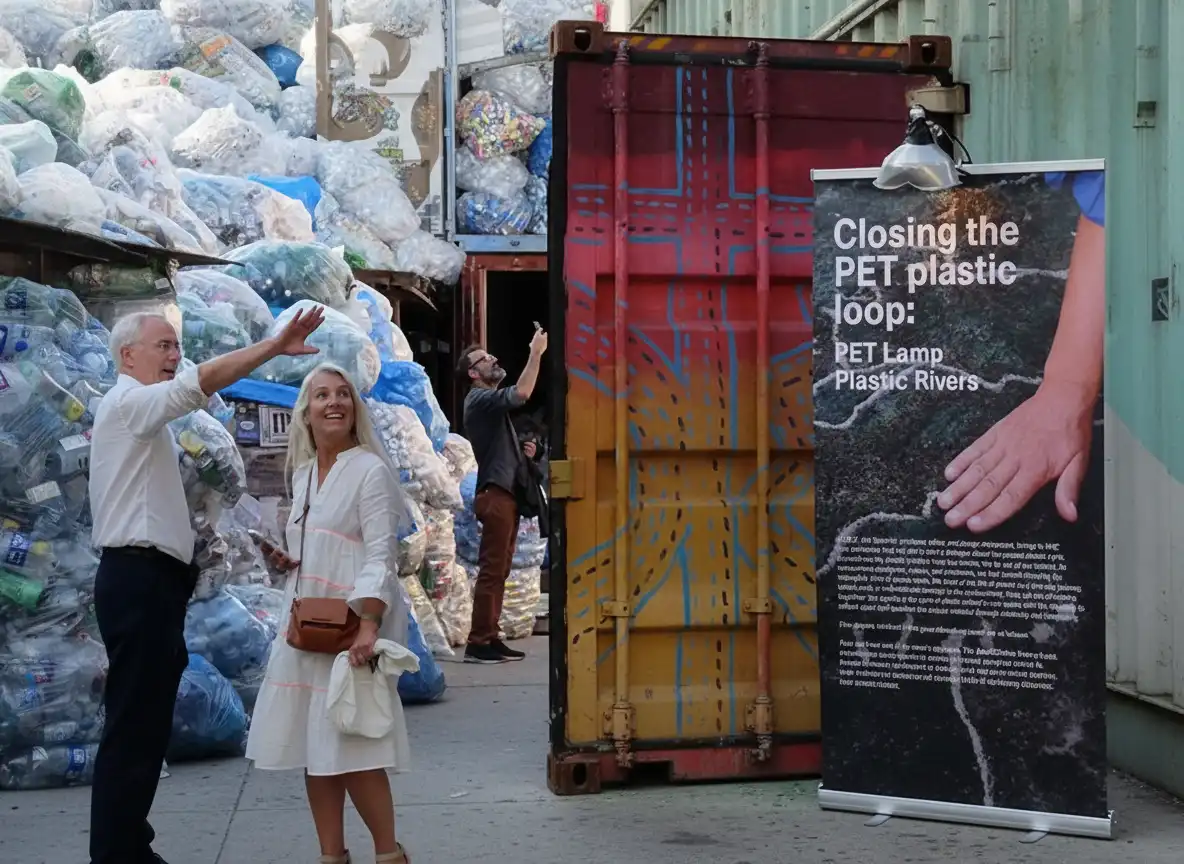
ACdO’s social impact initiative, PET Lamp and Plastic Rivers weaved its way into the heart of the conversation between plastic producers, collectors, recyclers and consumers about how to close the loop on plastic waste last month with an illuminating pop-up exhibition at NYCxDesign. The show, which counted on the sponsorship of AdaPETation, a solution-seeking organization created in 2021 by Evertis and Selenis (IMG Group) was hosted at the Sure We Can recycling centre, community space and sustainability hub in Brooklyn, New York.
The first stop on a world tour to showcase the systemic issues surrounding plastic waste, the exhibition was designed to honour the hard-working recycling industry and talented artisans from all over the world. PET Lamp, Plastic Rivers and AdaPETation are taking a fresh look at our relationship with trash, inviting indigenous wisdom and systems thinking into the 21st century conversation about exactly how the human species weaves itself into the earth’s fragile ecosystems and works with the planet’s finite resources.
Regenerative in its outlook, the Spanish designer has been co-creating his remarkable lighting collections and tapestries with artisans from Ghana, Thailand, Chile, Colombia Japan, Australia and Ethiopia since 2012. Celebrating local weaving traditions, PET Lamp works with artisans to upcycle post-consumer PET plastic into designer pieces that have been added to the permanent collection of the Victoria and Albert Museum, London, the Centre Pompidou, Paris and the Museo del Diseño de Barcelona, Barcelona, amongst others. Awarded the Ro Plastic Prize 2021 in the Urban Public Furniture Design category in Milan, Plastic Rivers is a critical design piece, “a product manifesto”, says its creator, Álvaro Catalán de Ocón.
“This collection of rugs showcases the problematics of plastic as a material, of waste colonialism and the current commercial waste industry, and inspires us to think twice about our habits and industrial practices. The collection is composed of ten maps showcasing the ten most polluted rivers on Earth, in maps stitched to scale, ‘pixel by pixel’, from images taken from Google Earth. The rugs are made from recycled PET plastic, taken from plastic debris from oceans and rivers, and turned into soft, cozy and resistant rugs.”
“Our design process starts with a simple question. How? How can we upcycle plastic bottles creatively to create new forms of empowerment to local communities? How can we do better?” says Catalán de Ocón. “Our objective is to think about the validity of the object in the long term, and to prevent it from becoming obsolete after only a few minutes. The right use of the bottle would allow it to be transformed into a coherent, functional and desirable product for the market,” he says. Marta Matos Gil, founder of The AdaPETation Network, welcomed the initiative and the impact it can have in raising awareness of the issue of plastic waste in one of the most important design events in the calendar year.
“People like Álvaro Catalán de Ocón that can see the beauty and recognise the value of plastic are so important in elevating the conversation about how best to treasure the material and make sure it is used wisely,” says Matos Gil. “The way PET Lamp and Plastic Rivers seek to empower local communities and traditions is beautiful. The installation in Brooklyn was an incredible opportunity to showcase artisan talent from around the world. Designed to bring solutions together this is just one project that we believe exemplifies the regenerative mindset we want to inspire with the AdaPETation Network.”